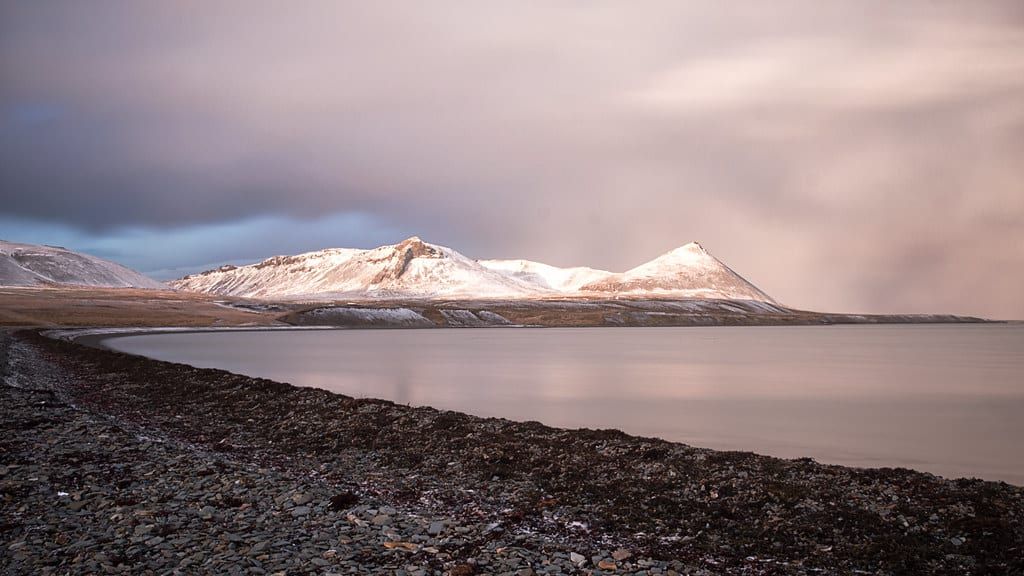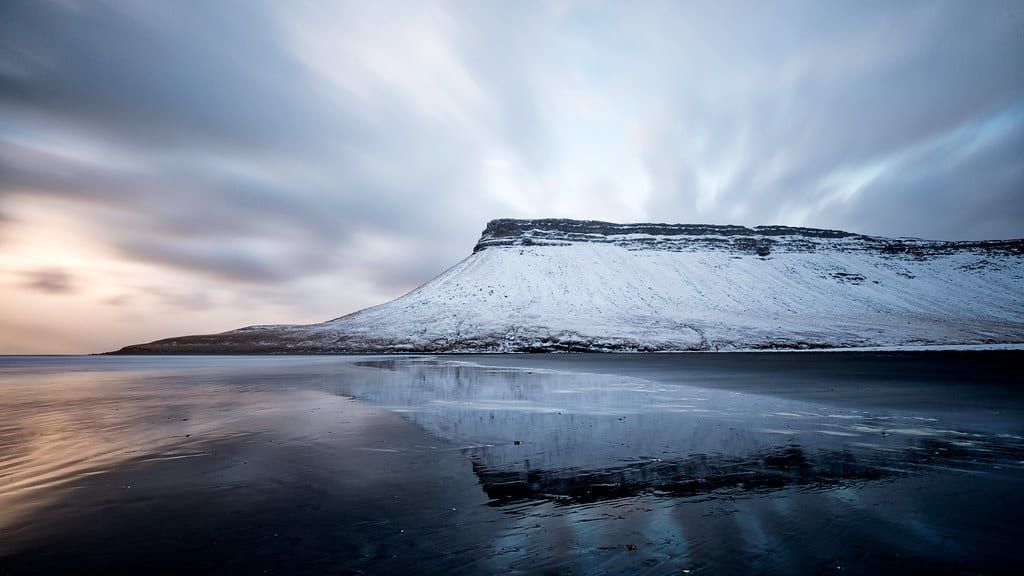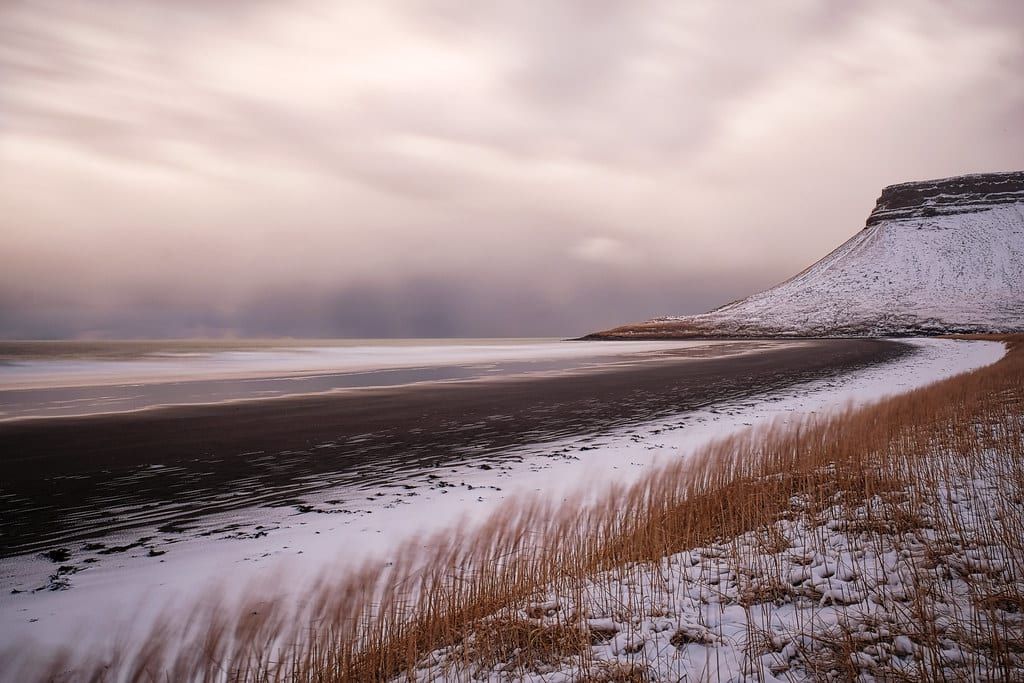
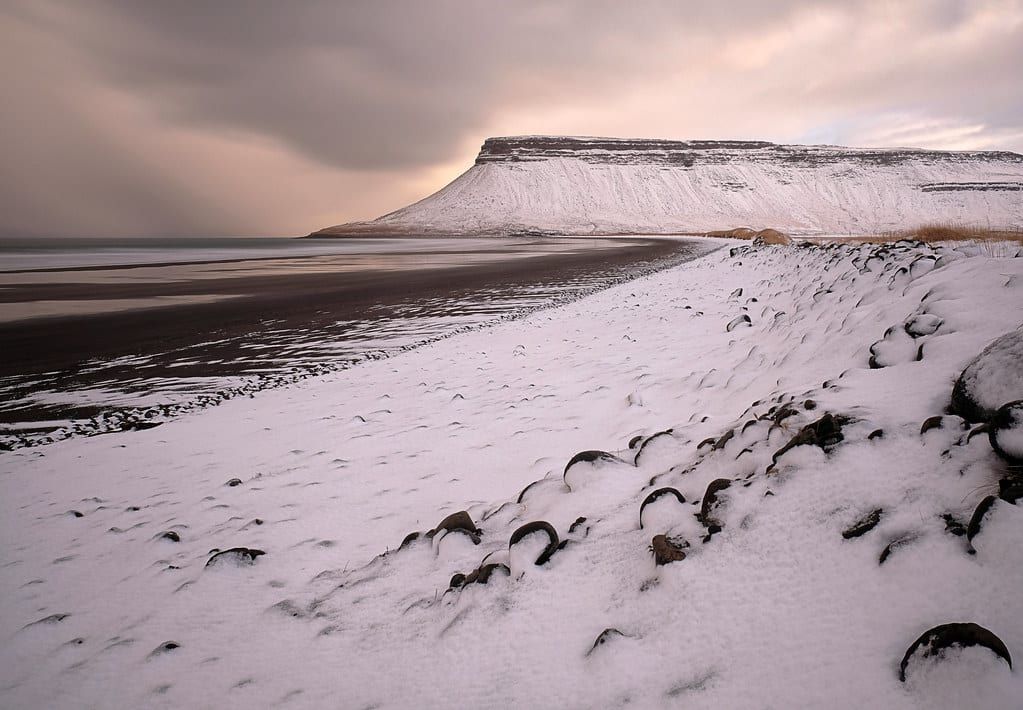
Yes, Snæfellsnes works in winter — and for the right traveller it works beautifully. The peninsula's glacier volcano, black beaches and 463-metre Kirkjufell sit barely two and a half hours from Reykjavík, the loop roads stay ploughed all year, and from November to March you'll share the car parks with a handful of cars instead of a fleet of coaches. The trade-off is time: in deepest winter you get roughly 4–6 hours of daylight, and every plan bends around the weather.
For landscape photographers, aurora hunters and anyone who values empty viewpoints over long checklists, winter Snæfellsnes is the best version of the peninsula. Snow on black lava sharpens every contrast, the low sun drags golden light across most of the day, and in 2025 UNESCO designated the peninsula Iceland's first Biosphere Reserve — 146,300 hectares of glacier, lava field and coast that still reads like the whole country in miniature.
It's a more weather-dependent trip than the South Coast, though. Storms can swallow a morning, some stops become unreachable, and the classic summer circuit of ten stops simply doesn't fit four hours of light. Budget one very tight day for the highlights, or better, two days with an overnight — that's the only version that leaves room for sunset, aurora and the delays winter will hand you. If you're new to Iceland's things to do on the peninsula, winter rewards picking a short list and doing it properly.
Is Snæfellsnes Worth Visiting in Winter?
Worth it, with conditions. Winter daytime temperatures average around 0°C (32°F), dipping to −10°C (14°F) in cold snaps, but the wind is what bites — exposed viewpoints like Saxhóll or the Lóndrangar cliffs can feel brutal on a bad day while Grundarfjörður's harbour stays civil. Bring layers you can seal against the gusts and a plan you can shrink.
What you get back is the peninsula without crowds. Kirkjufell's car park in February holds a scatter of photographers instead of tour buses. Djúpalónssandur's black pebbles sit under snow. And because the sun barely clears the horizon, the light stays soft and low from late morning until it sets — photographers get a golden hour that lasts most of the day.
Be honest about the fit, though. If your list is long, if you dislike driving on ice, or if this is a once-only Iceland trip in midwinter, the South Coast's flatter roads and bigger infrastructure are the easier winter choice. Snæfellsnes in winter suits travellers who accept that a storm may rewrite the day and plan accordingly.
When to Go: Weather, Daylight and Month-by-Month
Winter on Snæfellsnes runs November through March, with the deepest snow and ice from December to February. The month you pick changes the trip more here than almost anywhere in Iceland, because daylight is the whole budget.
November is the gentlest entry. Temperatures sit near freezing, some summer services are still running, and the dark returns quickly enough to make aurora hunting practical. Snow is usually patchy rather than permanent.
December and January are the hardest and most dramatic months. Daylight shrinks to roughly 4–6 hours, storm risk peaks, and the nights stretch long enough that aurora photography is at its best — if the sky cooperates. Roads stay ploughed but icy; this is the window for travellers who've driven in winter before.
February and March are the sweet spot for most visitors. Weather tends to settle compared with midwinter, snow still covers the peaks and lava fields, daylight stretches back toward eight hours, and orcas start moving along the coast. If you want winter scenery with a margin for error, book here.
The daylight math matters more than the temperature. A summer-style loop of every stop needs 7–8 hours of sightseeing plus 2–3 hours of driving; in December you might have five hours of light total. Plan around the light — pick your stops by priority, cluster the ones that sit close together, and leave the driving to the dark hours.
What to See: How Each Stop Behaves in Winter
Most headline sights stay open all winter — the national park has no gates and charges no entry fee, just a ISK 1,100 parking fee per car, valid until midnight across every park lot (details are on our opening hours and fees page). What changes is access and comfort, stop by stop.
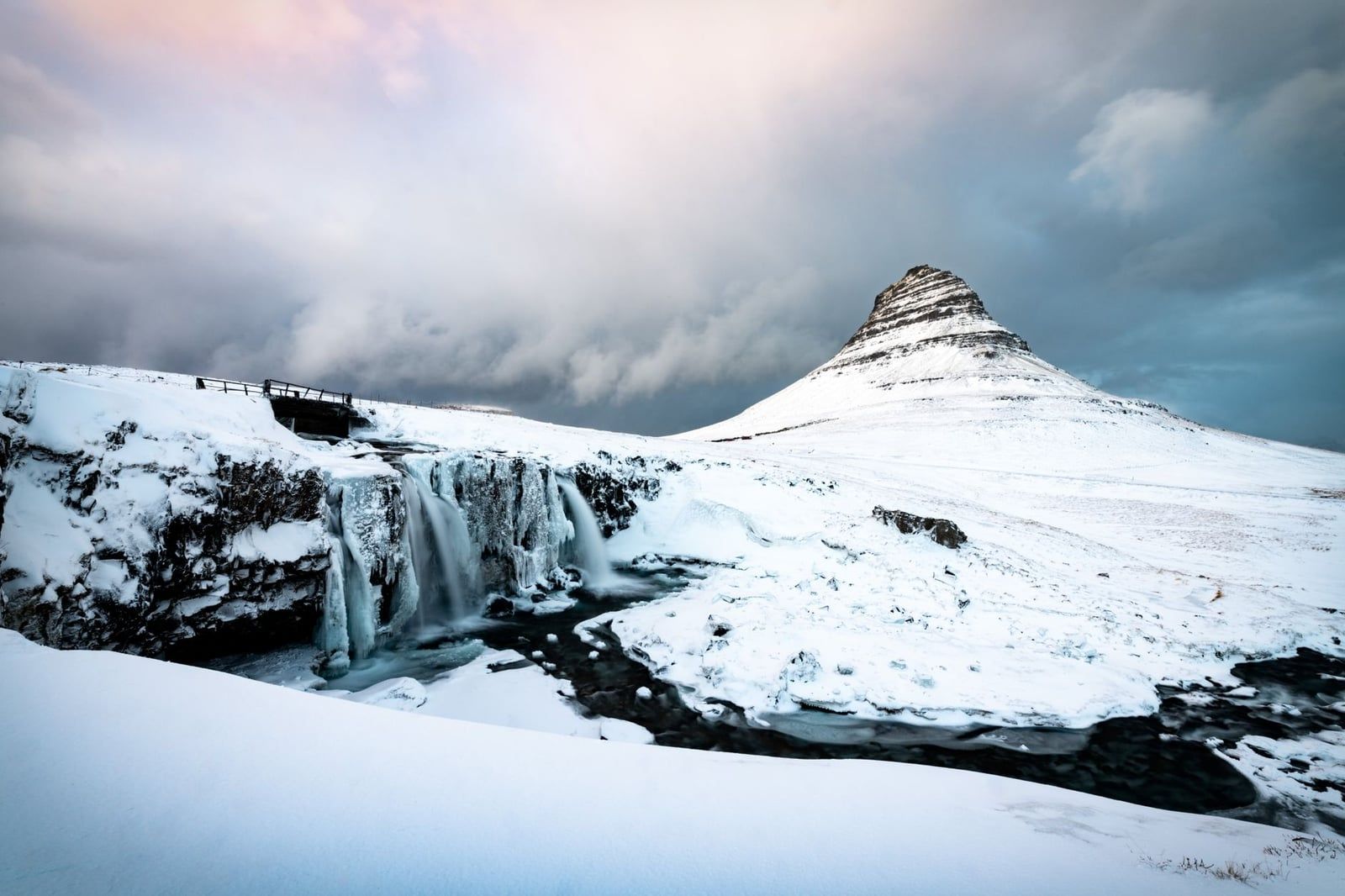
Kirkjufell and Kirkjufellsfoss
Iceland's most photographed mountain is also its easiest winter stop. The 463-metre 'church mountain' rises straight off Route 54 at Grundarfjörður, and the path to the waterfall viewpoint is cleared from the car park — cleared, but often icy, so clip on spikes. The twin cascades of Kirkjufellsfoss partially freeze, which is half the appeal. Give it 30–60 minutes.
Climbing the mountain itself is banned from November to mid-June, and honestly the ban spares lives: climbers died on its rotten rock in 2017, 2018 and 2022, and local rescue teams have said they won't risk personnel on it. Shoot it from below. In winter the aurora often swirls directly behind the peak.
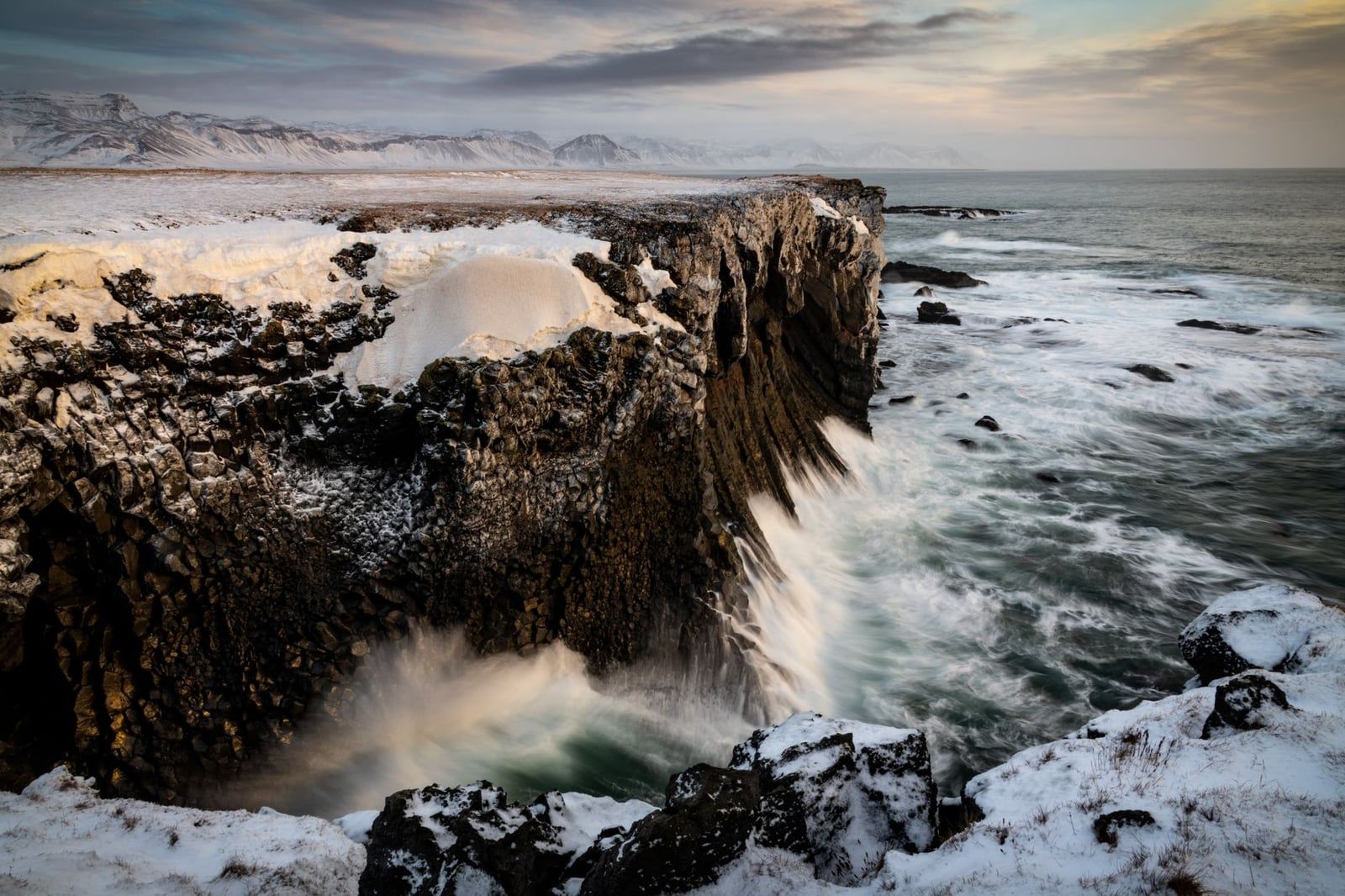
Arnarstapi coastal walk
The cliff-top path from Arnarstapi past the Gatklettur sea arch is cleared and marked in winter, and 30–60 minutes out and back covers the best of it. Winter seas hit these cliffs hard — the spray and crash against the black basalt is the whole show. The full 2.5-kilometre walk to Hellnar is doable in calm weather but uneven underfoot; most winter visitors walk partway and turn back.
Djúpalónssandur
A beach of polished black 'lava pearls' set inside a lava amphitheatre, reached through a gap in the cliffs from the parking area. The four lifting stones — from the 23 kg Amlóði to the 154 kg Fullsterkur — sit above the tideline, and rusting pieces of the British trawler Epine, wrecked here in 1948, lie where they fell. It's a memorial, not a prop; leave everything where it is.
The hazard here is the sea itself. Sneaker waves at Djúpalónssandur surge far past the previous waterline without warning, and swimming is prohibited. Never turn your back on the ocean, and hold children's hands on the whole walk down.
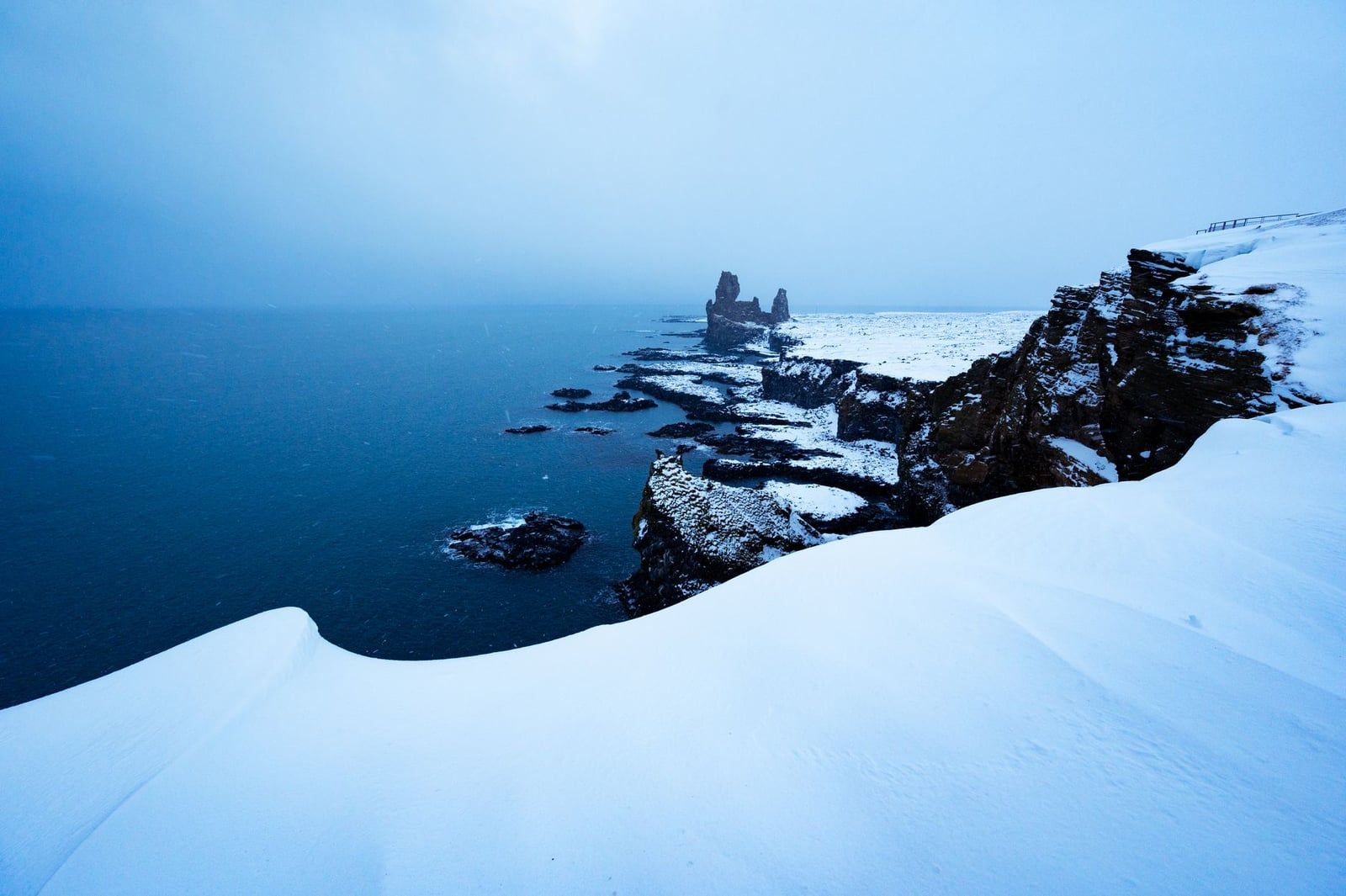
Lóndrangar and Malarrif
Two basalt sea stacks — 75 and 61 metres tall, the remains of an old volcanic plug — rise from the surf near the Malarrif lighthouse. It's a short viewpoint walk from the visitor centre car park, and the easy 2.6 km trail toward Svalþúfa is fine in winter boots if the wind allows. Photographers rate the east-facing deck best before lunch, when the low winter sun lights the towers.
Búðakirkja
The black wooden church at Búðir is a five-minute stop that winter turns into a photograph: pitch-black clapboard against snow, lava field behind, glacier often visible ahead. No walking, no effort, no fee — the church sits outside the national park. Pair it with the drive past the Búðir dunes on Route 54.
Saxhóll crater
A 40-metre cinder crater right beside the coastal road, climbed on a curving steel stairway in 10–15 minutes for a 360-degree panorama over lava fields toward Snæfellsjökull. The stairs stay clear of snow on their treads, but the summit is fully exposed — don't attempt it in strong wind, which is the single most common reason to skip it in winter.
Ytri Tunga
The golden-sand beach hosts harbour and grey seals that haul out on the rocks year-round, a short walk from the parking area. In deepest winter they're more elusive — they're in the water more and the rocks fewer — so bring binoculars and set expectations low. It costs ten minutes; treat it as a bonus stop, not a plan.
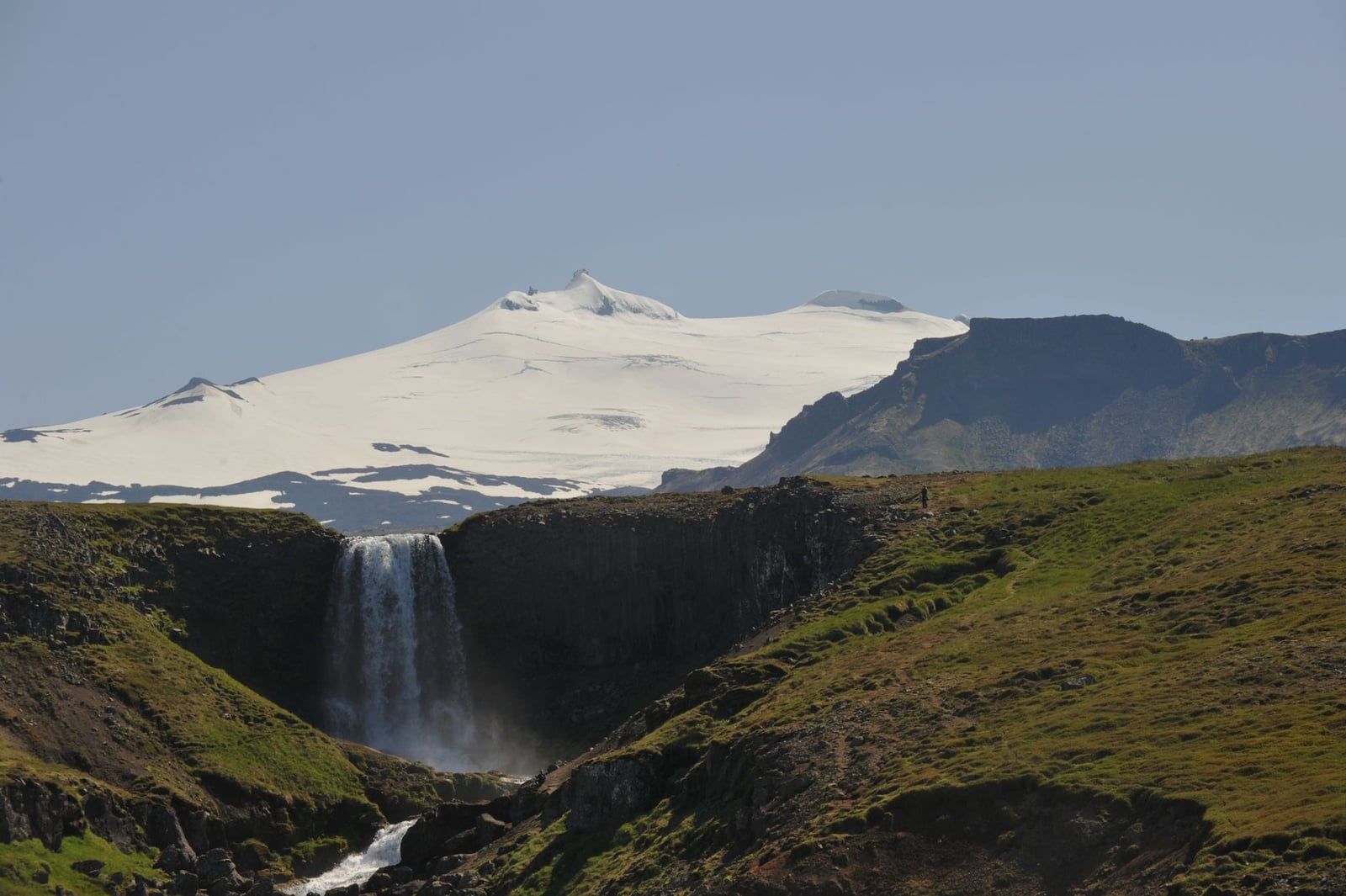
Snæfellsjökull and the national park
The 1,446-metre glacier-capped stratovolcano — Jules Verne's doorway to the centre of the Earth — dominates every view on the peninsula, and the national park wrapped around it is the only one in Iceland that reaches the sea. In winter you experience the glacier from the ring road and viewpoints: the approach roads (570 and F575) close seasonally, and the ice itself demands full equipment and a licensed guide. That's a trip to book, not improvise.
Rauðfeldsgjá gorge — skip it in winter
The dramatic fissure splitting the Botnsfjall cliff east of Arnarstapi is a summer stop, full stop. The narrow trail into the slot is buried under snow in winter and dangerously icy underneath. Don't budget daylight for it — photographers who try usually turn back at the mouth, and turning back is the right call.
Winter Activities: Lava Cave, Hot Springs and Orcas
Winter strips the peninsula down photographically, but three activities are actually at their best — or only possible — in the cold months.
Vatnshellir lava cave
An 8,000-year-old lava tube over 200 metres long, running 35 metres beneath the volcano's flank. Tours run year-round with Summit Adventure Guides, the sole licensed operator — winter hours (1 Nov–30 Mar) are 8:00–17:00, roughly three departures daily, each 45 minutes. Adults pay ISK 5,900, kids 5–11 go free, and under-5s aren't admitted. You descend on two spiral staircases with a flashlight the operator provides (your own headlamp isn't allowed inside).
This is the peninsula's best bad-weather plan: it's underground, so storm and darkness don't matter, and the temperature sits just above freezing year-round. Tours sell out — book ahead, arrive ten minutes early, and wear real shoes, warm layers and gloves. You can compare lava cave tours before committing.
Hot springs: which ones actually work
Guðrúnarlaug, near the eastern approach, is the one that works — a free, natural hot pool you can soak in through winter (visitors in early March report the water running cooler than summer, but pleasant). Park properly: not on the road and not on private land, or you may return to a note or worse.
Two others disappoint in winter. Lýsuhólslaug's geothermal baths open only on selected weekends, announced on their Facebook page — check before you drive. Sturlungalaug's access track is unmaintained all winter, reachable only by big 4x4 or an hour's walk. Neither belongs on a winter itinerary without confirmation.
Winter orca watching
The peninsula's winter wildlife headline is the orca. Láki Tours runs whale watching from Grundarfjörður roughly December to March — killer whales and sperm whales work the Snæfellsnes coastline in late winter and spring, following herring into Breiðafjörður — then switches to Ólafsvík from April to October. A morning on the water with orcas off Kirkjufell is the one winter experience here you can't get anywhere else in the country. Dress like you mean it; it's cold out there.
Northern Lights in Snæfellsnes: Where and When to Look
Aurora season on Snæfellsnes runs roughly September to April, with the peak hours between 9pm and 2am and activity often strongest around midnight. Two things decide your night: clear skies and geomagnetic activity. Neither is negotiable, and both are forecastable — which is where most travellers go wrong.
Build the habit each evening: open the Icelandic Met Office's aurora forecast at vedur.is, cross-check its cloud-cover map for West Iceland, and read the Kp index (a Kp 3–4 is enough at Iceland's latitude for a strong display). Then check road.is before driving anywhere dark — an icy pass to reach a clearer sky isn't a good trade. Our fuller northern lights in Snæfellsnes guide walks through the whole workflow.
The peninsula earns its aurora reputation with dark countryside and ready-made foregrounds: Kirkjufell and its waterfall is the classic shot, and Djúpalónssandur, Lóndrangar, the Hellnar–Arnarstapi coast and the Snæfellsjökull viewpoints all put a landmass between you and light pollution. Bring a tripod and a wide lens — exposures of 5–15 seconds at high ISO will register what your eyes sometimes can't.
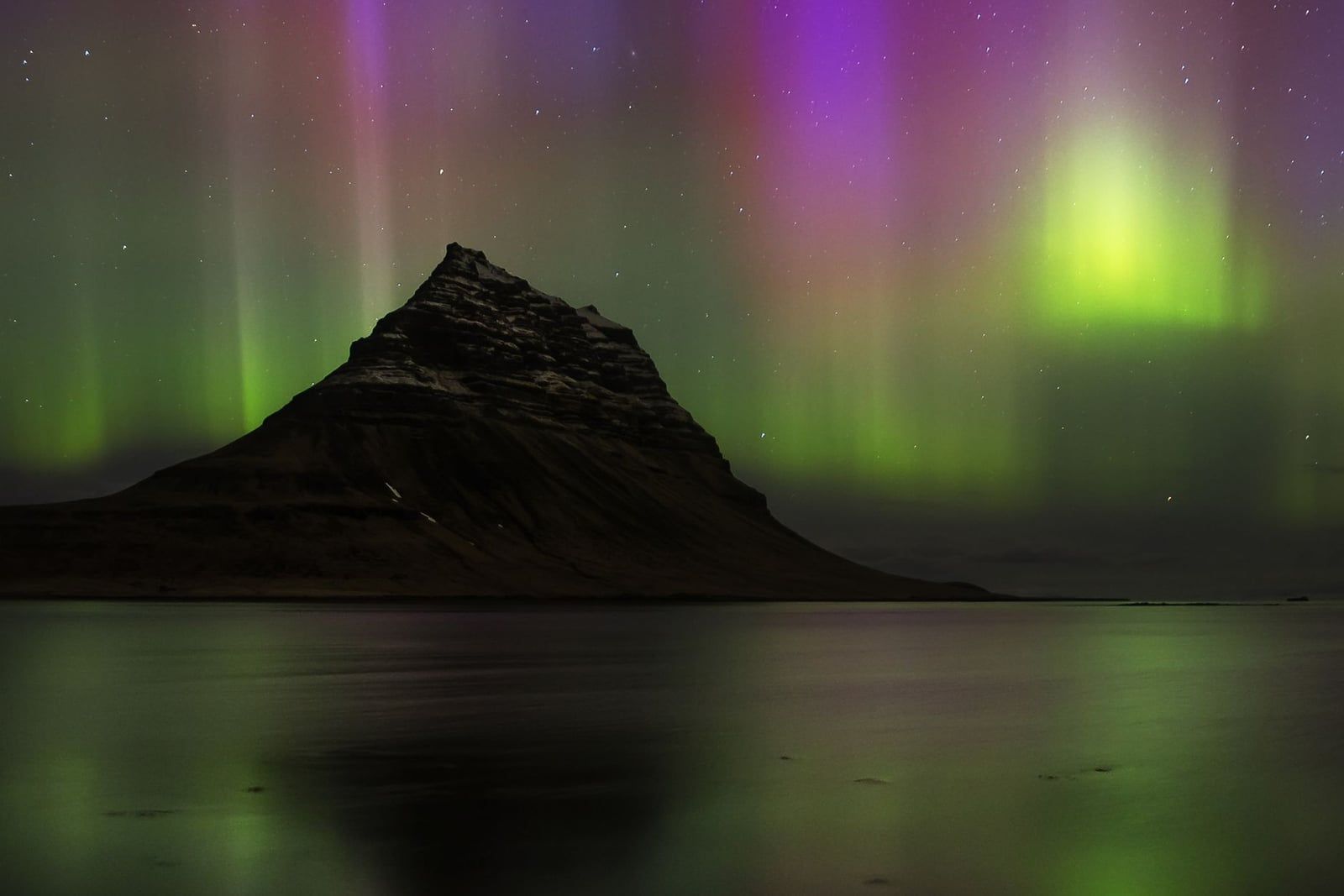
February and March often bring the most stable aurora-hunting weather of the season — long nights, less storm chaos, clearer stretches than midwinter. And the arithmetic is simple: a day-tripper who leaves for Reykjavík at 5pm has zero aurora chances. Stay the night, and every clear hour between 9pm and 2am is yours.
Winter Driving vs. Day Tours from Reykjavík
The drive out is simple: Route 1 north from Reykjavík to Borgarnes, then Route 54 onto the peninsula — about 140 km, roughly 2 to 2.5 hours to Grundarfjörður in good conditions. The full sightseeing loop is about 165 km, 2h15 of pure driving, which balloons to 7–8 hours with summer-length stops. In winter, that 7–8 hour figure collides with a five-hour day of light.
The main roads — 54, 56 and 574 — are paved and kept open year-round, but winter driving here is still a real proposition. Part of Route 54 between Búðir and Ólafsvík is gravel; the turn from 56 onto 54 crosses a mountain pass that can sit under snow; and the wind is fierce enough to close roads and push a light car across a lane. A 4x4 earns its cost in winter, winter or studded tires come standard on Icelandic rentals, and headlights must stay on 24 hours a day — it's the law.
Make the checks part of your morning: road.is for closures and conditions, vedur.is for weather warnings, both before you commit to the day's route. Never drive off-road to shortcut across lava or moss — it's illegal and the damage takes decades to heal.
The alternative is letting someone else handle the ice. Guided winter tours from Reykjavík run year-round, about 11 hours round trip with hotel pickup, covering Kirkjufell, Arnarstapi, Djúpalónssandur and more — small-group versions start around ISK 24,500 per adult. If icy gravel makes your hands tighten on the wheel, you're travelling solo, or the forecast shows a storm front parked over the peninsula, the tour is the better day. Our Snæfellsnes day trip from Reykjavík guide compares the options in detail.
| Self-driving | Guided day tour from Reykjavík | |
|---|---|---|
| Best for | Confident winter drivers; anyone staying overnight on the peninsula | Ice-averse drivers, solo travellers, tight itineraries |
| Cost | 4x4 rental plus fuel (no tolls); ISK 1,100 park parking fee | From about ISK 24,500–28,990 per adult, all-in |
| Flexibility | Your pace; stop anywhere, anytime, chase clearing skies | Fixed itinerary, roughly 11 hours door to door |
| Driving burden | Zero; you drive the pass and the gravel | None; professional driver handles conditions |
| Aurora odds | High — stop the car anywhere dark | None on the tour itself; you're back in Reykjavík by evening |
| Depth of commentary | Limited — stops only where you park | Local guide, but less time at any one spot |
A One-Day Winter Itinerary That Fits the Daylight
Here's a single-day plan built for a 10:00–17:00 daylight window, sequenced south coast first so the day finishes at Kirkjufell for golden hour — with aurora after dinner if you're staying over. It assumes a start from Reykjavík around 8:00 or a base on the peninsula.
Morning: Búðakirkja first (five minutes, often sunlit by mid-morning), then the Arnarstapi cliff walk — 30–60 minutes to Gatklettur and back. The low sun lights the coast from the south at this hour, and the seas are the drama.
Midday: Djúpalónssandur for the beach, lifting stones and wreck (45 minutes, keep off the tideline), then Lóndrangar at Malarrif — the viewpoint is ten minutes from the car. If you've pre-booked, slot the 45-minute Vatnshellir cave tour in here; it's the one stop immune to weather and darkness.
Afternoon: Saxhóll's crater stairway if the wind is behaving, or Ytri Tunga for a quick seal check on the way north. Then drive to Grundarfjörður and arrive at Kirkjufell for the last hour of light — the low sun raking across the peak and the partly frozen falls is the shot the whole day has been aimed at.
After dark: dinner in Grundarfjörður, then the aurora check — vedur.is, Kp, clouds. Clear? Kirkjufell under the lights is thirty minutes from your table. Cloudy? Early night; tomorrow has more of the same scenery and you'll need the rest.
When a storm eats the morning, drop stops in this order: Ytri Tunga first, then Saxhóll, then Arnarstapi (Djúpalónssandur and Kirkjufell are the keepers). Bad-weather fallbacks that still deliver: the Vatnshellir cave, the cafés and harbour of Stykkishólmur, and a soak at Guðrúnarlaug on the way back east.
With two days, split the coasts: south shore and the national park one day, north coast and Stykkishólmur the next, with a slow Kirkjufell evening between them. Overnighting in Grundarfjörður buys you sunset, sunrise and two aurora windows instead of none — it's the single biggest upgrade a winter trip can make.
Where to Stay and What to Pack
Grundarfjörður is the strategic winter base: Kirkjufell is on the doorstep, the town has restaurants and fuel, and the aurora foregrounds are minutes away. Stykkishólmur, the peninsula's biggest town, has the best facilities and the Westfjords ferry terminal — the natural choice for a north-coast stay. On the south coast, Fosshotel Hellnar and Hotel Búðir put you among the scenery, remote and quiet, with Búðir especially good for dark-sky aurora from the door. Whichever you pick, a countryside guesthouse away from town lights beats an in-town room if the lights are the goal — our where to stay on the peninsula guide has the full rundown.
The packing list is short and decisive:
- Ice spikes or crampons — cleared paths are still icy at Kirkjufell and Arnarstapi
- Windproof shell over thermal layers; gloves and a hat you won't lose
- Sturdy waterproof boots with real grip
- Tripod and wide lens for aurora and low-light landscape work
- Binoculars for seals at Ytri Tunga
- A headlamp for the dark hours around the day
- Sunglasses — low sun on snow is brutal
One habit ties it all together: check road.is and vedur.is the same morning, every morning, and let the forecast — not the itinerary — set the pace. Winter Snæfellsnes rewards travellers who plan tight and stay loose.
Frequently asked questions
Is Snæfellsnes worth visiting in winter?
Yes — for solitude, snow-draped landscapes and aurora skies. Just plan around 4–6 hours of daylight in December and January; February and March is the easier winter window, with more stable weather and orcas arriving along the coast.
Can you do Snæfellsnes as a day trip from Reykjavík in winter?
Yes, via a guided tour — year-round coach and small-group trips run about 11 hours with pickup in Reykjavík. Self-driving adds roughly 2–2.5 hours each way, so with only 4–6 hours of light, an overnight on the peninsula is the better plan.
Can you see the northern lights on Snæfellsnes?
Yes. Light pollution is low and the foregrounds are famous — Kirkjufell, Djúpalónssandur, Lóndrangar and the Hellnar–Arnarstapi coast. Season runs roughly September to April, best between 9pm and 2am with peak activity near midnight; February and March often bring the most stable skies.
Do you need a 4x4 to drive Snæfellsnes in winter?
It's strongly recommended. Routes 54, 56 and 574 are paved and kept open year-round but run icy and wind-scoured, part of Route 54 between Búðir and Ólafsvík is gravel, and the 56-to-54 mountain pass can sit under snow. Check road.is daily.
What's the weather like on Snæfellsnes in winter?
November through March, with average daytime temperatures around 0°C (32°F) and cold snaps to −10°C (14°F). Wind is the defining factor — it makes the air feel far colder and is the main reason plans change.
Can you see orcas or whales on Snæfellsnes in winter?
Yes. Late winter and spring is orca season along the Snæfellsnes coast, and Láki Tours runs orca-focused whale watching from Grundarfjörður roughly December to March, switching to Ólafsvík from April.
Can you climb Kirkjufell in winter?
No. Climbing is prohibited from November to mid-June, and the ban exists for good reason — climbers have died on the mountain in recent years. See it from the Kirkjufellsfoss path instead, and carry ice spikes because the cleared viewing paths still get icy.
How many days do you need for Snæfellsnes in winter?
One tight day covers the main highlights at winter pace. Two days with an overnight in Grundarfjörður is better — it adds sunset and sunrise at Kirkjufell, doubles your aurora windows, and absorbs the weather delays winter reliably delivers.
Sources
- snaefellsjokull.is/en/snaefellsjokull-national-park/about-the-national-park
- snaefellsjokull.is/en/frett/Service-fee-in-Snaefellsjokull-National-Park
- summitguides.is/vatnshellir-cave-tour
- unesco.org/en/mab/snaefellsnes
- en.wikipedia.org/wiki/Sn%C3%A6fellsj%C3%B6kull
- straeto.is/en/user-information/news/changed-route-system-in-the-countryside